
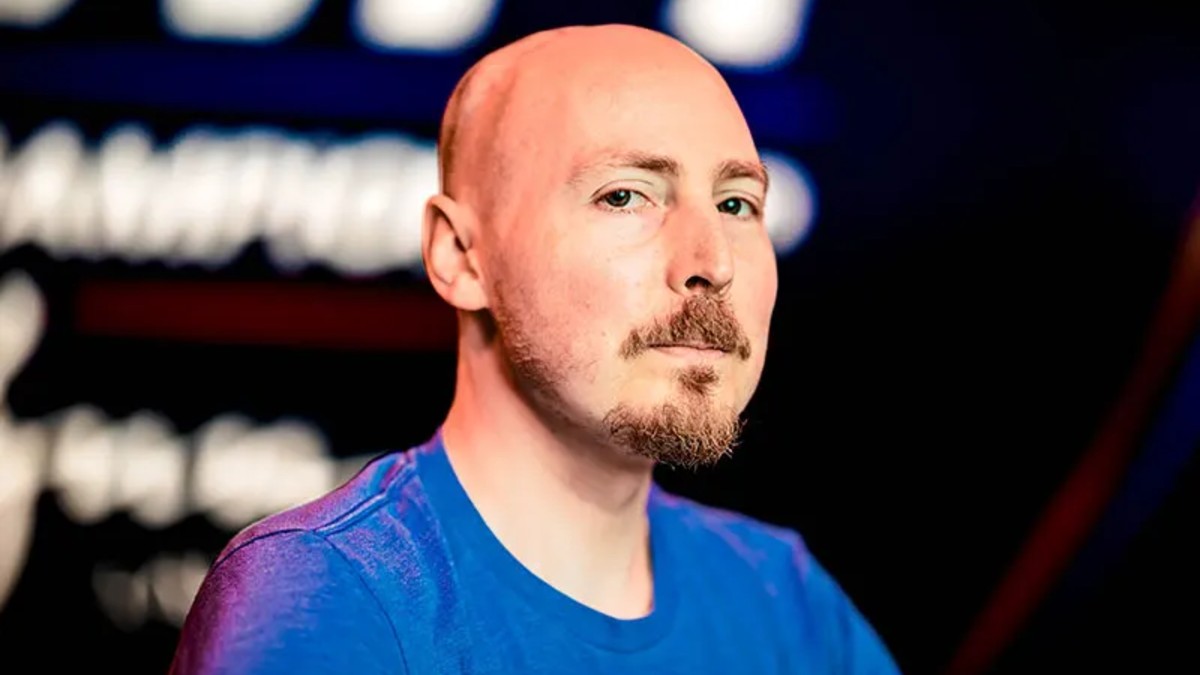
It’s not uncommon to hear stories from some of poker’s biggest tournaments of a player who finds themselves working with a short stack throughout much of the tournament. Sitting on somewhere around 10 big blinds, winning a pot without showdown to continue playing or occasionally finding that double up to give new hope.
Those stories almost always end with the player’s tournament run ending a little sooner than they’d like.
That doesn’t necessarily describe John Bird’s experience in the ClubWPT Gold $5M Invitational Freeroll, but it most certainly sounds a lot like his life. At least, his life since 2015 when the former professional poker player was diagnosed with brain cancer.
“I was putting up with a lot of neck pain, head pain … and months and months were going by because they originally missed it on the scans,” John says. “But then I was checked into Florida Hospital Orlando and within 48 hours I was recovering from brain surgery. That’s how fast they found it and needed to do surgery.”
The diagnosis – at least the original one – was glioblastoma, an extremely aggressive form of brain cancer, explained in agonizing detail by a sympathetic doctor hoping and trying to make a 12-18 month prognosis sound like a win.
For many of the players in the freeroll, it was their first time playing in a big stage live poker tournament. For John, it was likely his last.
“I don’t think I’m going to make it to these big events anymore … I used to come to the WSOP and a WPT here and there way back when,” John says. “It’s just kind of a weird thing to say and I don’t know how much longer I’m going to … I could be here a decade from now and that would surprise everyone.”
After completing 18 straight months of chemotherapy treatments, John hasn’t had any sort of treatment in about six months. His doctors told him that his body needed a break. Should the cancer show signs of life again, he’s ready to take on more treatments, but he also fully understands what he’s facing.
“It’s like you do the treatments, you kind of exhaust the treatments, hopefully it works on the tumor and in my case it has and it shrinks down and dies down, and then it’s become stable where it’s like you don’t see any growth,” John says.
“But then inevitably it always comes back. It’s just a matter of time.”
When John woke up from the first surgery, some of the everyday functions people often take for granted were a struggle. He sat in the hospital bed and was unable to move his arms or legs. He had to learn how to walk again.
“You don’t think about it, but when you’re relearning how to walk and use your muscles, they had to tell me, for instance, ‘Alright, to take a step, you need to bend your knee’ and you don’t think what to do, you just walk. So they’re like, ‘All right, bend this knee, push this leg forward, et cetera, et cetera.”
And he knew he had to start having some very difficult conversations with his friends and doctors.
“I was asking people that were visiting me, ‘How much time do I have?’,” John recalls. “A doctor came in and he was like, well, people in your case… if things don’t go well initially, you’ve got three to six months, maybe.”
That was almost ten years ago.
In the time since, John, now 38 years old, became an ambassador of sorts for Optune, a wearable device that sends low-intensity electric fields to the brain to slow or even stop the growth of the cancerous cells. That role has allowed him to travel around the country spreading a message of hope and encouragement to others facing a battle similar to his own.
Things took another downward turn when doctors discovered that he was now facing Leptomeningeal spread.
“(It’s) the worst of the worst. Basically, it’s when the tumor cells go into the fluid lining of the brain and that’s when you basically have months to live,” John says. “And if you’re able to beat the initial prognosis of months, you typically make it about a year if you’re lucky.”
That was almost two years ago.
“There’s no evidence of disease right now and that’s where I’m at currently. We’re going to do surveillance MRIs until something comes back,” John says. “But right now I’m doing MRIs every three months and continue to use Optune, which I’m taking a break from right now.”
His time as a professional poker player probably feels like another lifetime ago. A regular in the online cash game streets on PokerStars, he was frequently duking it out with the likes of Tom Dwan and Garrett Adelstein. He also had an extremely memorable run in the 2007 World Series of Poker Main Event as a 21-year-old, finishing 89th for $82,476.
The combination of Black Friday and his diagnosis pushed poker to the backburner for John, but in recent years he’s felt well enough to play some $1/$2 and $2/$5 near his hometown of Zephyr Hills, Florida. So when the Gold freeroll was announced back in September, John took a shot at getting one of the highly coveted Golden Passports and ultimately found success after signing up via WPT ambassador Patrick Tardif.
When he took his seat in the freeroll, he was more than willing to share his story with his tablemates – not out of a desire to get sympathy from them, but in hopes of bringing the cancer battles that so many face to light.
“Sometimes I feel like it’s a little bit of the elephant in the room. Oftentimes I’m wearing (the Optune) medical device, but either way, I want to bring awareness to it,” John says. “Then people start sharing. Everybody’s gone through pain and suffering in their own life, and sometimes people step forward and they’re like, ‘Oh, my brother had cancer’ and they have a sad story to share, but still we’re talking about it and I think it’s an important conversation to have.”
While he ultimately didn’t cash in the freeroll, John enjoyed the opportunity to sit down at a poker table and play some cards while also getting to know some of the people at his table.
“It was a lot of fun. Our table was a lot of fun. There was a lot of fun banter,” John says. Still, sitting for that long isn’t something his body is able to embrace quite as easily as it once was.
“We played for five hours or something before I got knocked out. My back was a little sore when I got back to the room. I’m trying to get in better shape and that’ll help with that, but yeah, it takes a toll,” John says.
He did his best to manage the day though. Sneaking off early to get to the restroom before the rush or some mild stretching at the table.
“One big thing with a fight with cancer is the treatments you’ve been through are as damaging if not more damaging (than the cancer), but you have to fight fire with fire,” John says. “I’ve been on 42 months of chemo overall over the last 10 years. Very necessary. It’s kind of why I’m still alive, but that really – and everyone varies – but that really tears you apart.”
He was also playing with a heavy heart. Over the years he has been an invited speaker at conferences and met doctors and other survivors. At an American Brain Tumor Association meeting in Chicago, he met a woman who had Oligodendroglioma, a different type of tumor than what John has.
“We kept in touch over the years. She stayed busy with doing things for charity, being on podcasts, doing a lot of cool stuff, but living her life and she got married and whatnot,” John says.
“In this last year, I found out she was doing rough and then they found she had Leptomeningeal spread, which I know people aren’t going to do as well as I do.”.
After arriving in Las Vegas earlier this week, John learned that she had passed away.
“I didn’t realize it until (Wednesday), but she won her fight with cancer and gained her wings.”
There is no pretense with John and what lies ahead for him. He’s beaten the odds for so long that he’s had multiple opportunities to sit with those close to him and say goodbye.
“I mean I’ve kind of lived so long through this, we’ve all thought I was going to die on a few occasions. It was getting to the end and then I kind of pulled through where I’ve had group parties with all my friends where we all got to enjoy each other’s company and stuff like that,” John says. “We were just happy, enjoying life and I think that’s what a lot of the get-togethers were about.”
To most poker players, a six big blind stack at any stage of a tournament might feel like the end is near, but to John it represents hope and an opportunity to remain in the game. He’s still peeling back cards, wondering if he might somehow find a double up.
Those gatherings with loved ones and the 8.5 years he’s survived beyond even the most optimistic version of his original diagnosis allowed John a chance to feel some level of comfort in the inevitable.
“When the time comes, I’m at peace with everything.”
–30–
Photos by Rachel Kay Winter.
This article originally appeared on WPT.com on December 16, 2024.